What Is Unified Pharmacy and Onsite Primary Care
A Simple Guide for Senior Living
If you manage an assisted living community, group home, or residential care setting, you are responsible for a lot of moving parts. Staffing, resident care, medication management, family communication, and regulatory oversight all compete for your time.
You may have heard phrases like unified care, integrated pharmacy, or onsite primary care. They sound promising, but they also raise a practical question.
What does this actually change for your building, your staff, and your residents?
This guide explains unified pharmacy and onsite primary care in plain language. It focuses on how the model works in real senior living settings and why more communities are exploring it as a way to simplify care instead of adding complexity.
1. What Unified Pharmacy and Onsite Primary Care Means
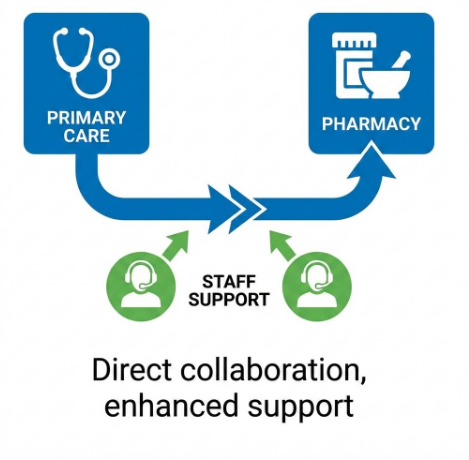
Unified pharmacy and onsite primary care means that medical care and medication services work together as one coordinated system rather than as separate vendors.
In this model, primary care providers and pharmacists communicate directly. Medication decisions are made with pharmacy input from the start. Orders move straight to the long term care pharmacy, and staff receive clear, timely instructions. Medications arrive when they are needed, without unnecessary follow up.
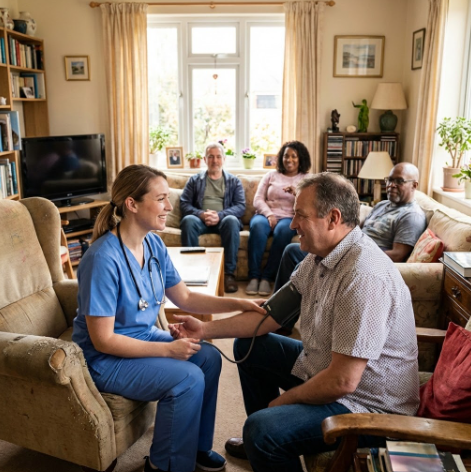
Care2U provides mobile primary care by bringing providers onsite to see residents where they live. Care2U provides long term care pharmacy services designed specifically for senior living environments. Together, they function as one care team.
The key difference is connection. Instead of staff acting as the bridge between medical providers and the pharmacy, the systems are already aligned.
2. Why the Traditional Model Creates Challenges
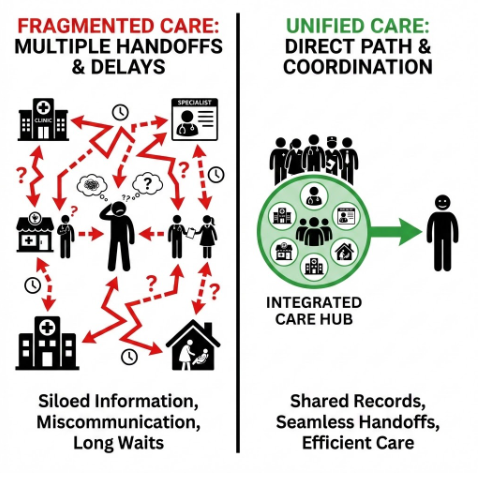
In many senior living communities, pharmacy and primary care still operate independently. This is not due to lack of effort. It is the result of systems that were built separately over time.
Typically, a provider sees a resident onsite or through telehealth. A medication is adjusted. Orders are written or sent after the visit. The pharmacy receives partial or delayed information. Staff follow up to clarify details. Medications arrive later than expected.
Each step works on its own, but the process depends heavily on staff to keep things moving. When information is unclear or incomplete, delays happen. When staff are busy or short staffed, communication gaps appear.
Medication management for elderly residents is already complex. Many residents take multiple medications, and changes are frequent. When pharmacy and medical care are not aligned, confusion increases. Stop orders can be missed. Instructions may be unclear. Staff spend time tracking down answers instead of focusing on residents.
Unified care exists to remove these breakdown points, not by adding more tools, but by reducing unnecessary handoffs.
3. How This Shows Up Day to Day for Staff and Residents
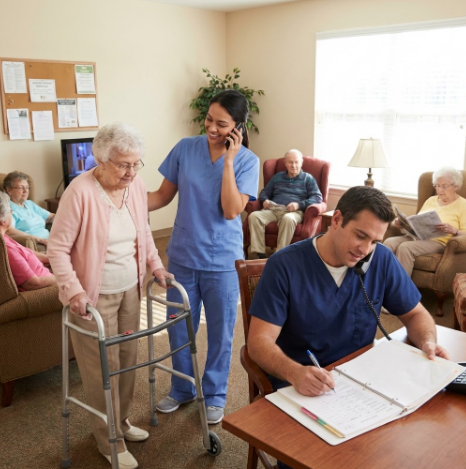
When care is fragmented, your staff feels it first.
Caregivers spend time calling pharmacies, following up with providers, and explaining delays to families. This work often happens in between medication passes and resident needs. It adds pressure to already demanding shifts and pulls attention away from direct care.
Residents may wait longer for medications to start or change. Symptoms may last longer than necessary. Families may feel communication is slow or unclear during times when reassurance matters most.
Over time, this constant coordination contributes to stress and burnout. Even strong teams can feel stretched when systems work against them.
Unified pharmacy and onsite primary care change the daily experience by reducing this friction. Staff receive clearer information. Medication changes happen faster. Care feels more predictable and less reactive.
4. What Unified Care Looks Like in Practice
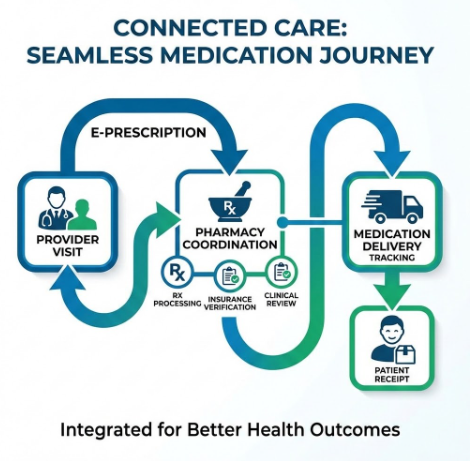
In a unified care model, the process is simpler by design.
A Care2U provider visits a resident onsite and evaluates their needs. Medication decisions are made with pharmacy considerations in mind. Care2U-Rx is looped in immediately. Medications are reviewed, prepared, packaged, and delivered in coordination with the facility. Staff receive clear instructions and support throughout the process.
There is no waiting on faxes and no guessing who is responsible for follow up. The care team operates with shared context and clear communication.
The difference is not clinical. It is operational. Fewer steps mean fewer delays, fewer errors, and less stress for staff.
This approach supports safer medication management for elderly residents while fitting naturally into how senior living communities operate.
5. Why Care2U and What to Do Next
Care2U was built specifically for senior care communities that need more than disconnected services. By unifying long term care pharmacy and mobile primary care, Care2U helps reduce administrative burden, improve communication, and support staff where they need it most.
Instead of managing multiple vendors, administrators gain a coordinated care partner. Staff are supported by aligned systems. Residents receive care that feels consistent and timely. Families gain confidence knowing pharmacy and medical providers are working together.
Unified pharmacy and onsite primary care is not about changing everything you do. It is about simplifying the parts that create the most friction.
If you are curious whether this model could work for your community, a conversation is often the easiest next step.
Learn how unified pharmacy and onsite primary care can reduce errors and simplify care in your senior living community.
Talk to a Care2U specialist or schedule a free meet and greet to explore the model and see if it is the right fit.