5 Ways Connected Primary Care and Long Term Care Pharmacy Support Assisted Living Teams
Assisted living leaders carry a heavy operational load.
On any given day, you are balancing staffing schedules, medication administration, documentation requirements, family communication, and the changing needs of residents.
Even a small disruption can ripple through your entire community.
A delayed prescription affects a medication pass.
A missed appointment creates documentation pressure.
Transportation challenges pull staff away from residents who need them.
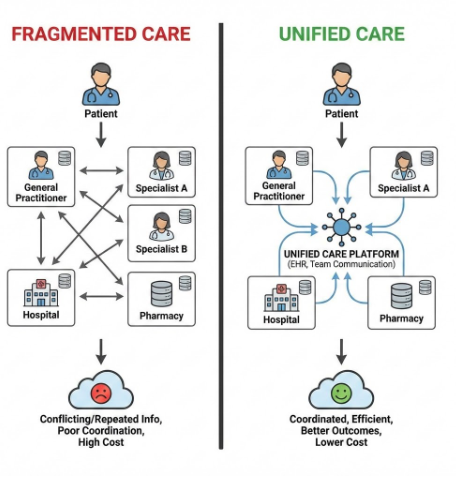
Most of the time, these problems are not caused by people. They come from systems that are not connected.
When mobile medical care and long term pharmacy services operate separately, communication slows down and staff are left coordinating the gaps.
But when those services work together as one coordinated system, assisted living operations tend to feel steadier and more predictable.
For many assisted living communities, connected primary care and pharmacy workflows reduce daily stress for staff while improving continuity of care for residents.
Here are five ways that connected care models support both operations and resident well-being.
1. On-Site Primary Care Reduces Operational Disruption

Transportation is one of the most common operational challenges in assisted living.
Getting residents to outside appointments requires coordination between staff, families, transportation providers, and clinicians. Schedules shift. Staff coverage becomes tight. Memory care residents may experience confusion or distress during travel.
When appointments run late, the effects often ripple throughout the day.
On-site primary care services change that dynamic.
When nurse practitioners visit residents inside the community, care happens in a familiar setting. Staff spend less time coordinating logistics and more time focused on resident care.
On-site visits also allow communities to handle important clinical needs more efficiently, including follow-up evaluations and required services such as two-step TB testing.
Instead of organizing care around outside appointments, your team can keep operations centered inside the building.
For assisted living teams, that stability makes a meaningful difference.
2. Coordinated Long Term Care Pharmacy Support Prevents Medication Delays
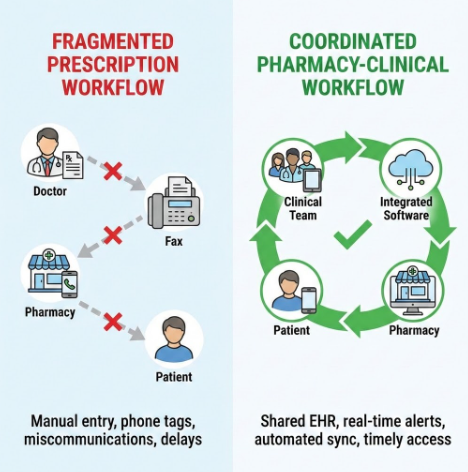
Medication coordination is another area where fragmented systems create pressure for staff.
A prescription may need clarification.
A prior authorization may be required.
A PRN instruction might not meet state guidelines.
A refill timing issue may arise during a medication pass.
When pharmacy and primary care providers operate independently, those issues can bounce between offices while staff wait for answers.
When those providers work together, many of these problems can be resolved more quickly.
A coordinated long term care pharmacy working directly with clinical providers can help:
Clarify prescriptions with the provider quickly
Identify compliance concerns early
Manage prior authorizations more efficiently
Align medication delivery with clinical care plans
For assisted living teams, this often means fewer last-minute scrambles and fewer medication delays.
3. Assisted Living Teams Gain Direct Access to Real Support
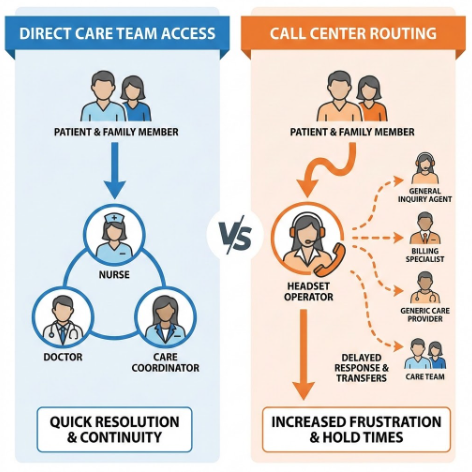
In senior living, waiting days for a response rarely works.
When a medication order needs clarification or documentation is required quickly, staff need access to someone who can respond.
Many national healthcare providers rely on large call centers or multi-layered support systems. While those structures work for large networks, they can create delays for individual communities.
Connected care models tend to operate differently.
When pharmacy and primary care teams collaborate closely, assisted living staff often have direct access to the people supporting their community.
That access may include:
Direct messaging with care team members
Faster clarification of orders
Quick access to medical notes when documentation deadlines are tight
The ability to escalate concerns without navigating multiple layers of support
Over time, this responsiveness builds operational confidence.
Your team knows who to call.
They know someone will respond.
And they know problems will not sit unresolved.
4. Compliance Support Becomes More Proactive
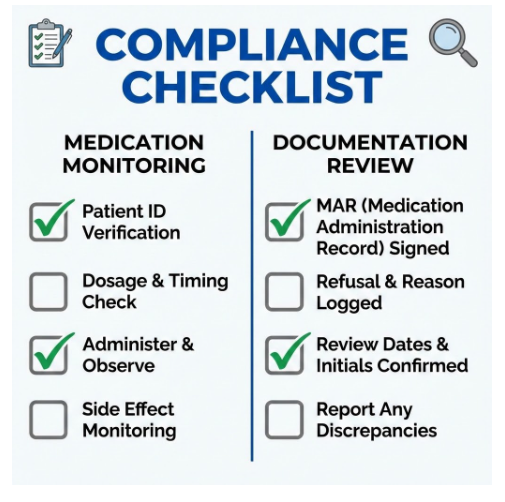
Regulatory expectations for assisted living continue to evolve.
Documentation requirements grow. Survey expectations tighten. Medication administration standards become more detailed.
For administrators and directors of nursing, this creates ongoing pressure to stay ahead of compliance risks.
When pharmacy and clinical providers operate separately, compliance issues may not be caught until they create a problem.
But when pharmacy and primary care teams work together, monitoring can become part of the care process.
A coordinated system can help:
Identify non-compliant prescription wording
Monitor refill timing and medication instructions
Provide faster access to clinical documentation
Support preparation for audits or surveys
Align medication orders with state regulations
Regulations will always exist in senior living. But proactive support reduces surprises.
And fewer surprises mean steadier operations for your team.
5. Residents Experience More Continuity of Care

Operational improvements are important. But ultimately, they exist to support residents.
When residents receive care from disconnected providers, follow-up can be slower and communication between teams may be limited.
When primary care providers and pharmacy teams collaborate directly, continuity improves.
Residents may experience:
Faster medication adjustments when health conditions change
More coordinated follow-up after clinical visits
Better communication between providers and families
Earlier recognition of emerging health concerns
Residents are not moving between disconnected systems.
They experience care that feels consistent and coordinated.
In assisted living communities, that continuity builds trust among residents, families, and staff alike.
Why Connected Care Matters for Assisted Living Operations
As assisted living communities grow, operational complexity grows with them.
More residents often mean more medications, more documentation, and more coordination between providers.
When those systems are fragmented, operational stress increases.
When those systems are connected, staff can focus more energy on residents instead of logistics.
Communities that use coordinated care models often see:
Fewer medication delays
Reduced transportation burden
Stronger compliance readiness
Faster communication between providers
More predictable daily operations
In senior living, that kind of reliability is not a luxury. It helps communities maintain the steady environment residents and families depend on.
How Care2U Supports Assisted Living Communities
Care2U was built around a simple idea.
Senior care communities work best when healthcare providers operate as a coordinated team.
Care2U brings mobile primary care, behavioral health and long term care pharmacy services together under one connected model, designed specifically for assisted living and residential care communities.
Our teams work closely with administrators, directors of nursing, and caregivers to support:
On-site nurse practitioner visits
Coordinated pharmacy services
Direct communication with care teams
Proactive medication monitoring
Local support that understands how assisted living communities operate
The goal is not to add another vendor to your workflow.
It is to reduce the operational burden on your staff so your team can focus on what matters most: caring for residents.
If you would like to learn more about how connected primary care and pharmacy services can support your assisted living community, book a consultation to schedule your free meet and greet.
Because when care works together, your entire community feels the difference.